The Role of Law Faculties in the Reasoning of Judicial Decisions

Within the
scope of the project “Reasoning of Judicial Decisions”, initiated by the
Justice Academy of Türkiye on 16 October 2020 under the vision “Effective
Training for Justice that Inspires Confidence”, a workshop on “The Role of Law
Faculties in the Reasoning of Judicial Decisions” was organized with the
participation of the deans of 57 law faculties. Our university was represented
at the workshop by Dr. Yavuz Özkan, Vice Dean of the Faculty of Law.
The
workshop aimed to raise awareness and foster dialogue on the role of legal
reasoning in undergraduate and postgraduate curricula, particularly in courses
on legal argumentation and methodology, as well as on examination methods.
Key
themes addressed at the workshop included the right to reasoned judgments, pedagogical
perspectives on enhancing reasoning and analytical skills, argumentation
training, and the contribution of legal education to judicial reasoning. The
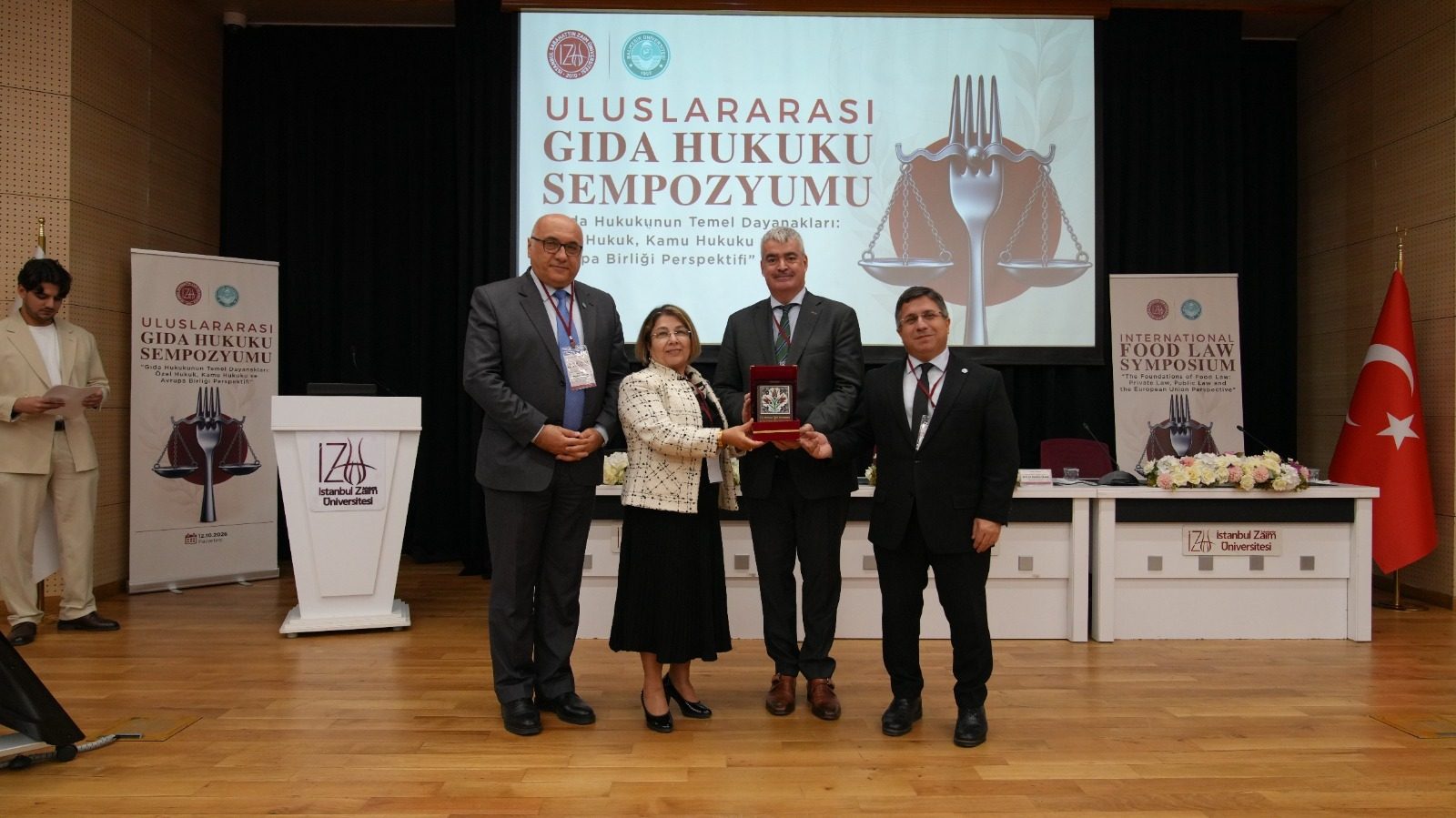
workshop, which consisted of three sessions, concluded with a group photograph.
“REASONED
JUDGMENT” PROJECT TO MAKE SIGNIFICANT CONTRIBUTIONS TO THE LEGAL SYSTEM
In his
opening remarks, President of the Justice Academy of Türkiye, Muhittin Özdemir,
emphasized that drafting reasoned judgments is one of the most crucial issues
of the Turkish judiciary. He expressed his full conviction that the project
would provide significant contributions to the Turkish legal system and
underlined the importance of strengthening cooperation with law faculties
through this initiative.
The
Justice Academy, with its renewed and enhanced structure and vision of
“Effective Training for Justice that Inspires Confidence”, continues its
activities in four main areas: training of candidates, training of judges and
prosecutors, in-service training programs for public institutions, and
international training programs for judges and prosecutors from foreign
countries.
President
Özdemir further noted that the ultimate aim is to cultivate judges and
prosecutors who are committed to the rule of law and human rights, impartial,
independent, conscientious, guided by professional ethics, and capable of
meeting society’s need for justice.
Project
Background and Objectives
The
project was launched on 16 October 2020, within the framework of the Action
Plan on the Prevention of Violations of the European Convention on Human Rights
and the Judicial Reform Strategy Document of May 2019, in order to address
violations related to the right to reasoned judgments.
Conducted
under the leadership of the Justice Academy of Türkiye in partnership with the
Ministry of Justice, the Council of Judges and Prosecutors, the Constitutional
Court, the Court of Cassation, the Council of State, the Union of Turkish Bar
Associations, and faculties of law, the project aims to systematically reform
and improve the drafting style of judicial decisions.
The
primary goals include:
Providing
training to judges and prosecutors to enhance their reasoning skills,
Establishing
standards for drafting reasoned decisions and ensuring their implementation,
Promoting
clear, reasoned, and legally sound judgments to strengthen public trust in the
judiciary,
Raising
awareness among stakeholders and the public on the importance of judicial
reasoning.
Activities
and International Cooperation
Since
its inception, the project has achieved significant milestones. A Scientific
Committee of 19 members, consisting of representatives from the Union of
Turkish Bar Associations and distinguished academics, and a Working Group of 23
members, including first-instance and high court judges, Justice Academy
lecturers, and officials from the Ministry of Justice and the Council of Judges
and Prosecutors, were established.
Regular
roundtable meetings have been held since October 2020 to set the roadmap. Key
activities include:
The
Opening Conference on 3 June 2021 with the participation of the Minister of
Justice,
Needs
assessment studies in constitutional, administrative, criminal, and private
law,
An
international seminar on 5 November 2021 entitled “Comparative Perspectives on
Judicial Reasoning”, with the participation of 250 judges, experts, and
academics from the European Court of Human Rights, the United Kingdom, Italy,
Germany, Spain, France, the United States, and Türkiye,
The
publication of an e-book titled “Reports and Papers”, covering findings in
constitutional and administrative law.
Future
Steps
In the
upcoming period, the following activities are planned:
A
national workshop in March 2022 to evaluate the findings so far,
A
two-day national symposium in May 2022 on “The Language of Judicial Decisions”,
Roundtable
meetings to set reasoning standards and educational models,
An
international symposium in July 2022 on global academic and judicial approaches
to reasoning,
Integration
of developed materials into training-of-trainers programs and in-service
training.
The
project is scheduled to conclude with a Closing Symposium in October 2023.
Contribution
of Law Faculties
The
reasoning of judicial decisions cannot be addressed solely by judicial bodies;
the role of legal education in law faculties is equally important. The workshop
emphasized the significance of integrating reasoning-centered courses into
undergraduate and graduate curricula, raising awareness about examination
methods, and exchanging views on pedagogical approaches.
The Justice Academy expressed its willingness to benefit from the proposals of law faculty deans, stressing that the project’s ultimate goal is to align Turkish judicial decisions with international standards and to ensure the highest level of protection of human rights.